
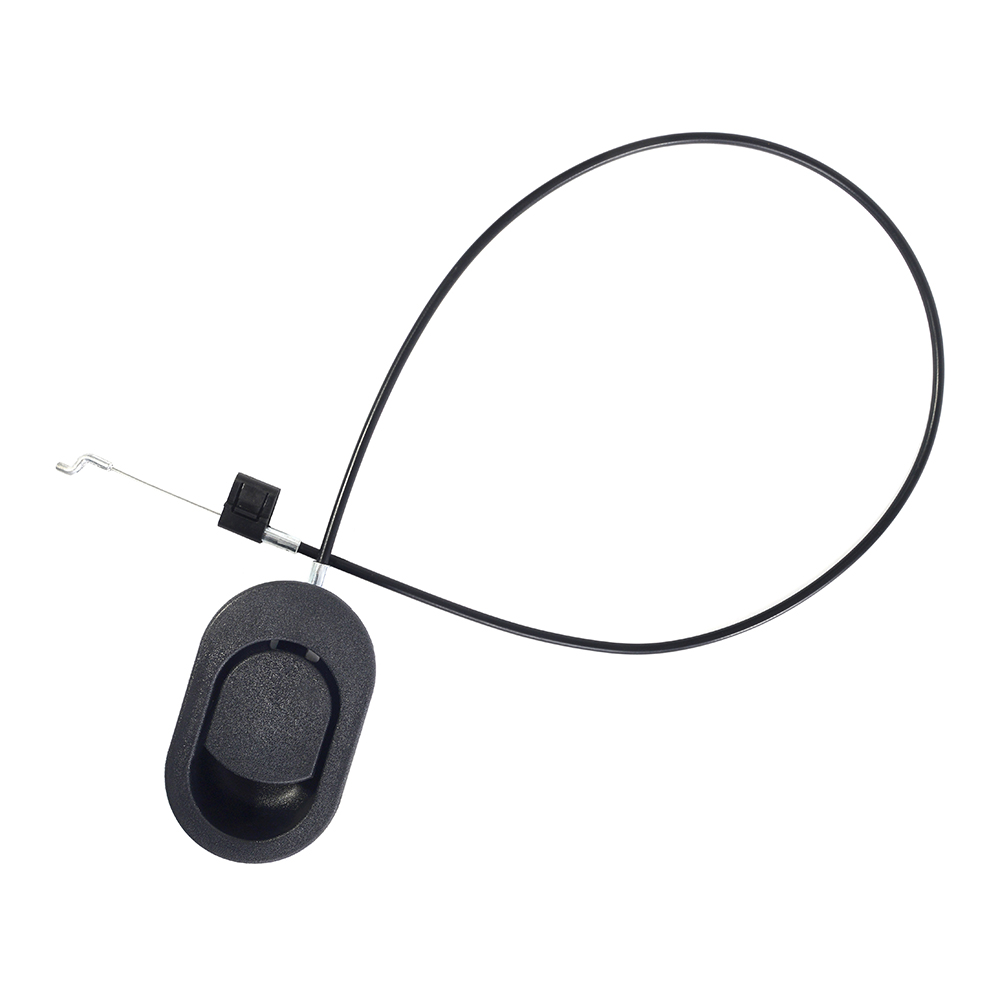
 Actual product photo
Original photos
The AI setting is for illustration. Use the original photos and specifications to choose your product.
Ref SF-2864
Recliner cable and pull lever
£18.90
No VAT added. Delivery for this item: £15.54. Standard delivery is free on orders of £240 or more. Delivery and returns
Choose quantity
Listed as in stock on 13 November 2026. Availability confirmed before payment.
Product details
Replacement recliner cable and pull lever for compatible manual recliner chairs, armchairs and sofas. Pulling the lever moves the inner cable, operating the release mechanism that allows the recliner to open. Use it for furniture repair, upholstery and refurbishment where an existing pull handle, release cable or complete cable-and-lever assembly has become damaged or worn. Replacement recliner cables can look very similar while differing in length, cable travel, end fittings and mounting details. Compare the complete original assembly carefully before ordering. For refitting the underside after repair, see Black Dipryl/Corovin and the wider Hessian & Lining Cloths range.
Full description and care
Recliner Cable & Pull Lever for Manual Recliner Chairs and Sofas
The Recliner Cable & Pull Lever is a replacement control assembly for compatible manual recliner chairs, armchairs and sofas.
The user-operated pull lever connects to the recliner mechanism through a flexible cable. When the lever is pulled, the inner cable moves and operates the release point within the recliner, allowing the footrest or reclining mechanism to open.
It is a useful replacement component for professional upholsterers, furniture repair workshops and customers refurbishing a manual recliner where the original handle, cable or complete release assembly has failed.
For other moving furniture components, see the Hinges & Mechanisms range.
Replacement Recliner Release Cable and Handle
A manual recliner relies on the release cable transferring movement from the pull lever to the mechanism beneath or inside the furniture.
Typical symptoms of a failed recliner cable or handle can include:
- Broken pull lever
- Lever moving without releasing the recliner
- Detached cable
- Frayed or damaged inner cable
- Split outer cable casing
- Excessive slack
- Cable end becoming disconnected
- Recliner mechanism no longer releasing from the handle
However, a failed cable is only one possible cause of a recliner not operating correctly.
The internal mechanism, springs, brackets and furniture frame should also be inspected before assuming that replacing the cable will solve the problem.
For other furniture repair components, browse Fixings & Brackets.
Check the Original Recliner Cable Before Ordering
Replacement recliner cables can appear almost identical in photographs while having important dimensional or mechanical differences.
Before ordering, compare the original assembly carefully.
Check:
- Overall outer-cable length
- Overall inner-wire length
- Exposed inner wire at each end
- Shape of the mechanism-end fitting
- Barrel, hook or loop arrangement
- Pull-handle shape
- Handle mounting arrangement
- Screw-hole spacing
- Cable-entry direction
- Required operating travel
Do not select a replacement solely because the pull handle looks similar.
A cable that is too short may place the recliner mechanism under constant tension or may not reach the mechanism correctly.
A cable that is too long may create excessive slack and fail to provide enough movement to release the recliner.
Where possible, keep the original cable beside you while comparing the replacement.
Measure More Than the Outer Cable
The length of the black outer casing is only one part of the specification.
Two recliner cables can have similar outer lengths but different amounts of exposed inner wire or different operating travel.
Measure the complete original assembly and record:
- Outer casing length
- Total inner cable length
- Exposed wire at the handle end
- Exposed wire at the mechanism end
- End-fitting dimensions
- Amount of cable movement when the lever is pulled
Photographing the original assembly before removing it can also provide a useful reference during installation.
For suitable measuring equipment, browse Measuring & Marking Tools.
Photograph the Cable Routing Before Removal
Before disconnecting the original recliner cable, photograph how it is routed through the furniture.
Record:
- Handle orientation
- Cable direction
- Route through the chair or sofa
- Retaining clips
- Attachment to the mechanism
- Position relative to springs
- Clearance around the footrest mechanism
- Areas where the cable passes through timber or upholstery
This is particularly useful where the cable disappears behind upholstery or beneath a seat platform.
Correct cable routing is important because an incorrectly positioned cable may become trapped, stretched or damaged when the recliner operates.
Accessing the Recliner Mechanism
Depending on the furniture construction, it may be necessary to remove some of the underside or rear lining before the original cable can be accessed.
Furniture bases are often finished with Corovin or other upholstery lining cloth.
A suitable Staple Remover, Tack Lifter or Ripping Chisel can help remove the original fasteners while providing better control than simply tearing the lining away.
For regular professional stripping work, the Osborne 1066 Staple Remover Pointed Spoon Type provides a broad working blade for lifting suitable upholstery staples.
Browse Professional Upholstery Tools for other furniture stripping, gripping, measuring and repair equipment.
Replacing the Recliner Cable
Before fitting the replacement cable:
- Support the furniture securely
- Return the recliner mechanism to its closed position
- Release cable tension where practical
- Remove the original handle carefully
- Retain suitable screws and clips
- Inspect the handle mounting area
- Check the mechanism attachment
- Compare the new and old cable assemblies
Route the replacement cable following the original path wherever possible.
Avoid sharp bends or unnecessary loops.
The cable should move freely and should not be stretched tightly when the recliner is in its normal closed position.
Keep the Cable Away from Moving Furniture Parts
Recliner mechanisms contain several moving components.
The cable should be routed so that it cannot be:
- Crushed by the furniture frame
- Rubbed by a spring
- Trapped beneath upholstery
- Pinched by a moving bracket
- Caught by the footrest
- Pulled tight when the chair reclines
- Bent sharply around timber
- Damaged by exposed screw or staple points
Check the full movement of the recliner before replacing any removed lining cloth.
Operate the mechanism slowly several times while observing the cable.
The outer casing should remain supported without restricting the movement of the inner wire.
Inspect the Recliner Mechanism Before Fitting a New Cable
A broken cable may be the obvious fault, but it is worth inspecting the rest of the recliner while access is available.
Check for:
- Bent release levers
- Broken mechanism springs
- Distorted brackets
- Loose bolts or fixings
- Obstructions
- Damaged frame timber
- Excessive corrosion
- Worn pivot points
- Broken seat springs
- Previous unsuitable repairs
Replacing the cable will not correct a seized, bent or broken recliner mechanism.
For associated furniture support repairs, browse Upholstery Springs and the wider Springs & Webbing range.
Check Seat Springs While the Furniture Is Open
Recliner chairs and sofas often use modern upholstery spring systems beneath the seat or back.
If the furniture has already been opened to replace the cable, it is a sensible opportunity to inspect the support system for:
- Broken springs
- Damaged spring clips
- Loose bracewire
- Uneven seat support
- Corrosion
- Springs rubbing against the cable or mechanism
Where the furniture uses sinuous springs, browse ZigZag Springs for replacement springs and associated components.
The 9 Gauge Zigzag Spring is available in a range of lengths for suitable furniture repairs.
Always match replacement springs to the original furniture construction rather than changing spring type simply because the furniture is already dismantled.
Inspect the Upholstery Foam During Repair
Accessing a recliner mechanism may also expose the condition of the seat, arm or back padding.
Check existing foam for:
- Permanent compression
- Splitting
- Crumbling
- Severe softening
- Uneven support
- Damage caused by moving metalwork
Where replacement padding is required, browse Foam Sheets for upholstery foam suitable for furniture repair and refurbishment.
The RX33/190 Blue Foam Sheet is a firm upholstery foam widely used for sofa and chair seating, fixed upholstery and general furniture repair applications.
The original furniture construction, foam thickness and required feel should guide the replacement grade.
Repairing Damaged Internal Panels
Some recliner chairs incorporate fibreboard or similar panel materials around arms, backs and concealed furniture sections.
If a panel has been damaged while the mechanism or cable has been in use, suitable replacement material can be found in Cardboard & Fibreboard.
The 3mm Fibre Board Sheet 1240 x 780mm can be used for suitable furniture panels, shaped areas and template work.
Structural recliner loads should still be carried by the appropriate frame timber and mechanism mountings rather than lightweight upholstery panels.
Refitting the Furniture Base Cloth
Once the replacement cable has been installed and the mechanism has been fully tested, the underside or rear lining can be refitted.
Black Dipryl/Corovin is commonly used on the bases of sofas and chairs to provide a neat concealed finish while helping protect the furniture interior from dust and loose debris.
Browse the wider Hessian & Lining Cloths range for other furniture lining materials.
Before closing the furniture:
- Test the recliner several times
- Check the cable remains clear
- Confirm the mechanism releases correctly
- Inspect every cable connection
- Make sure no tools remain inside
- Confirm no lining can enter moving parts
Only refit the underside covering once the repair has been checked.
Staples for Refitting Corovin and Furniture Linings
Furniture base cloth and lining materials are commonly secured with suitable upholstery staples.
Browse Staples & Tacks for furniture fasteners and the wider range of staples, brads and upholstery fixings.
Choose a staple series and leg length compatible with the stapling tool, timber frame and material being secured.
Keep staples clear of:
- Recliner cables
- Moving mechanism parts
- Springs
- Electrical wiring where present
- Pivot points
- Existing mechanism fixings
A staple placed directly through or beside the recliner cable can damage the casing or restrict movement.
Diagnosing a Recliner That Still Will Not Release
If the new cable and lever have been installed correctly but the recliner still fails to operate, inspect the mechanism rather than applying increasing force to the handle.
Potential causes include:
- Incorrect replacement cable
- Insufficient cable travel
- Excess cable slack
- Incorrect end fitting
- Incorrect cable routing
- Seized release mechanism
- Bent release lever
- Broken internal spring
- Mechanism obstruction
- Damaged furniture frame
Repeatedly pulling harder on the handle can damage the replacement cable or lever without correcting the underlying fault.
Recliner Mechanism Safety
Manual recliner mechanisms contain moving metal components and springs that can create trapping and pinch points.
Support the furniture securely before working underneath it.
Keep hands and fingers away from:
- Pivot joints
- Spring-loaded components
- Footrest linkages
- Scissor mechanisms
- Moving brackets
Do not place hands inside the operating mechanism while another person activates the recliner.
Where a mechanism is heavily distorted, seized or structurally damaged, further repair may require specialist furniture-mechanism knowledge rather than simply replacing the cable.
Additional product information
Replacement recliner cable and pull lever for compatible manual recliner chairs, armchairs and sofas. Pulling the lever moves the inner cable, operating the release mechanism that allows the recliner to open.
Use it for furniture repair, upholstery and refurbishment where an existing pull handle, release cable or complete cable-and-lever assembly has become damaged or worn.
Replacement recliner cables can look very similar while differing in length, cable travel, end fittings and mounting details. Compare the complete original assembly carefully before ordering.
For associated moving furniture hardware, browse Hinges & Mechanisms and Fixings & Brackets.
For furniture stripping and access during repair, explore Staple Removers, Tack Lifters & Ripping Chisels and Professional Upholstery Tools.
For refitting the underside after repair, see Black Dipryl/Corovin and the wider Hessian & Lining Cloths range.
Specifications are reproduced from supplied product data and have not been checked against a physical sample. Colours vary between screens and devices, so on-screen images may not exactly match the physical material.