
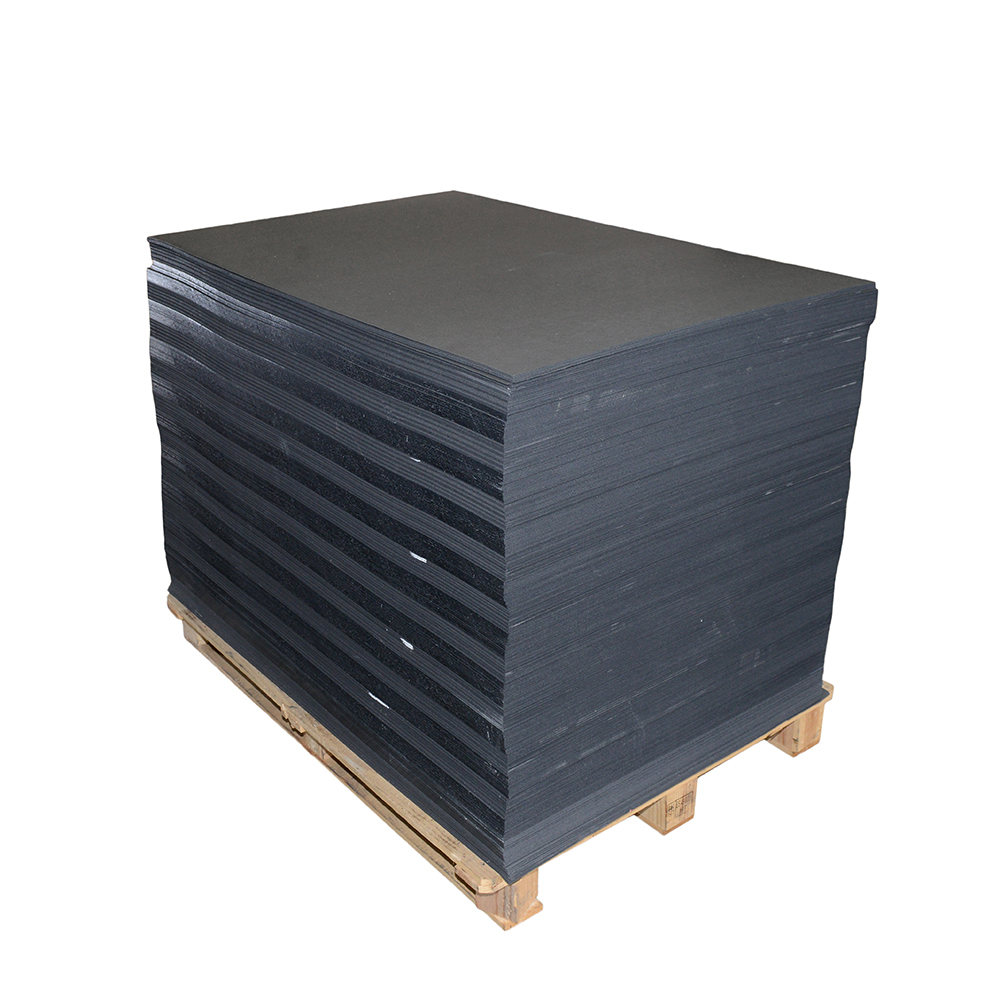
 Actual product photo
Original photos
The AI setting is for illustration. Use the original photos and specifications to choose your product.
Ref SF-2836
Fibre board sheet 1240x780x 3mm (10 sheets)
£185.60
No VAT added. Delivery for this item: £15.54, plus a £12.00 bulky item charge once per order. The £15.54 is free on orders of £240 or more. The extra charge still applies. Delivery and returns
Choose quantity
Listed as in stock on 13 November 2026. Availability confirmed before payment.
Product details
3mm upholstery fibreboard, also commonly referred to as millboard, for creating firm furniture backs, outside arms, facings, upholstered panels and reusable workshop templates. Measuring approximately 1240 x 780 x 3mm, this thicker board provides greater rigidity than the 1.5mm version and is particularly useful where a more panel or backing surface is required. Use alongside Foam Sheets, Profiles & Edge Rolls and Polyester Wadding when constructing complete upholstered backs, arms and furniture panels. Supplied in a pack of 10 sheets.
Full description and care
3mm Upholstery Fibreboard / Millboard Sheets
3mm Upholstery Fibreboard Sheets provide a panel material for furniture manufacturing, reupholstery, restoration, panel construction and workshop template making.
Also commonly referred to as millboard, each sheet measures approximately 1240mm x 780mm x 3mm and is supplied in a pack of 10 sheets.
At 3mm thick, this is the more rigid option within the Status Fabrics fibreboard range and is particularly useful where a firmer furniture panel is required.
Typical applications include:
- Outside sofa and chair backs
- Outside arms
- Arm facings
- Upholstered furniture panels
- Headboards
- Furniture side panels
- Backing panels
- Suitable shaped and profiled furniture sections
- Furniture manufacture
- Restoration work
- Production templates
- Prototype and pattern making
see the Cardboard & Fibreboard range for alternative board thicknesses and upholstery cardboard products.
A Firmer Board for Furniture Backs & Panels
The additional thickness of the 3mm fibreboard gives it more rigidity than lighter upholstery cardboard or 1.5mm fibreboard.
This makes it particularly useful where the finished furniture requires a firmer panel or backing surface.
Applications can include:
- Large outside backs
- Arm panels
- Furniture facings
- Headboards
- Upholstered wall or furniture panels
- Flat and gently shaped sections
- Areas where greater resistance to flexing is desirable
The board should still be properly supported by the furniture construction and securely fixed to sound frame material.
It should not be regarded as a replacement for structural plywood, MDF or damaged timber framing.
3mm or 1.5mm Fibreboard?
5mm and 3mm fibreboard, allowing the board to be selected according to the required balance between flexibility and rigidity.
Choose 3mm Fibreboard where:
- A firmer panel is required
- Greater resistance to flexing is desirable
- The panel is predominantly flat
- A more backing is required
- A robust reusable template is being produced
- The board forms a firm base within an upholstered construction
Choose 1.5mm Fibreboard Sheets where:
- Greater flexibility is useful
- The panel needs to follow a gentler curve
- Less panel thickness is required
- A lighter template or backing material is preferable
For lighter work and more flexible template making, also consider the 1.2mm Upholstery Cardboard Sheets.
The thickest board is not automatically the best choice. Select the material according to the furniture shape and the job the panel needs to perform.
Use with Foam Sheets
Fibreboard frequently forms the firm foundation beneath padded upholstery.
Once the board has been cut and fitted, suitable Foam Sheets can be added to provide the required shape, padding and comfort.
This type of build-up may be used for:
- Upholstered furniture backs
- Arm panels
- Headboards
- Furniture facings
- Wall panels
- Shaped backs
- Decorative upholstered sections
The fibreboard creates the supporting surface while the foam determines much of the finished shape and feel.
Different foam grades and thicknesses can be selected according to whether the application needs a soft comfort layer, firmer padding or simply enough foam to soften a hard panel.
Browse Foam Sheets for the complete selection of upholstery foam grades and thicknesses.
Use Fibreboard Templates for Foam Cutting
3mm fibreboard is also useful for making durable workshop templates, particularly where the same component will be manufactured repeatedly.
Once the template has been checked against the furniture, it can be placed onto a suitable Foam Sheet and used to transfer the required profile.
This can help when producing:
- Shaped back foam
- Arm pads
- Headboard foam
- Furniture facings
- Bespoke padding sections
- Repeated production components
- Left- and right-hand furniture parts
The firmer 3mm board is particularly useful where templates need to be stored and reused regularly.
Clearly identify permanent templates with the product or furniture model, component description, orientation and any relevant dimensions.
Combine with Upholstery Profiles & Edge Rolls
Fibreboard panels often work alongside Upholstery Profiles & Edge Rolls.
Edge rolls and profiles help turn hard or angular furniture-frame sections into smoother upholstered shapes before foam, wadding and the final fabric or vinyl covering are fitted.
They can be used to:
- Form rounded arm edges
- Create consistent furniture profiles
- Shape seat fronts
- Protect hard timber edges
- Blend the edge of a fibreboard panel into adjoining padding
- Support foam and wadding
- Produce repeatable furniture shapes
A typical upholstered panel construction might be:
Furniture frame 3mm Fibreboard Edge Profile Foam Polyester Wadding Fabric or Vinyl
Planning these materials together is important because each layer contributes to the final furniture dimensions and shape.
Fibreboard with Edge Rolls on Arms & Facings
Arm fronts and furniture facings are particularly good examples of fibreboard and profiles being used together.
The fibreboard can create the main face or supporting panel, while a suitable Edge Roll or Furniture Profile creates the required border or rounded edge.
Foam can then be added or blended into the profile before the final soft padding is applied.
This approach can help produce a consistent shape across repeated furniture units and prevent hard frame edges becoming visible through the finished upholstery.
Add Polyester Wadding for a Softer Finish
Once the fibreboard, profiles and foam have established the shape of the furniture, Polyester Wadding can be used where a softer outer layer is required.
Polyester wadding can help:
- Soften foam edges
- Blend adjoining materials
- Reduce hard transitions
- Create a fuller upholstered appearance
- Improve the surface beneath fabric
- Prevent minor foam irregularities showing through the cover
Where polyester wadding is applied over foam, use Status Fabrics Heavy Duty Spray Adhesive.
The adhesive keeps the wadding securely positioned, helps prevent it shifting or bunching while the covering is being fitted and helps achieve a smooth, consistent finished upholstery surface.
Wadding should be the finishing layer over a correctly prepared furniture build-up rather than being used to hide a poorly fitted fibreboard panel or badly aligned profile.
Measure & Mark Before Cutting
Because 3mm fibreboard is more than lightweight upholstery cardboard, accurate marking before cutting is particularly worthwhile.
Use suitable Measuring & Marking Tools to establish:
- Overall dimensions
- Straight cutting lines
- Curves
- Centre lines
- Furniture-frame positions
- Fixing locations
- Cut-outs
- Reference points
- Left- and right-hand components
Browse Rulers & Tape Measures for suitable workshop measuring equipment.
A rigid rule is useful for establishing straight edges and transferring dimensions, while a flexible tape measure can be more useful for checking furniture profiles and irregular sections.
Measure the actual furniture rather than relying entirely on an old backing panel, particularly on restored furniture where previous components may have distorted or been incorrectly fitted.
Cutting 3mm Fibreboard
3mm fibreboard requires more cutting effort than the lighter 1.2mm cardboard or 1.5mm board.
Use a suitable sharp cutting tool and work on an appropriate cutting surface.
Browse Knives & Foam Cutters for workroom knives and cutting equipment.
The Retractable Blade Craft Knife can be useful for suitable board trimming and detailed work.
When using a knife:
- Mark the required line accurately.
- Support the board on a suitable cutting surface.
- Use a straight edge where appropriate.
- Make controlled scoring passes rather than forcing the blade.
- Keep hands clear of the cutting path.
- Test-fit the panel before removing further material.
A sharp blade provides better control and a cleaner edge than trying to force a worn blade through the board.
For shaped panels, trim progressively until the required profile has been achieved.
3mm Fibreboard for Reusable Templates
The additional rigidity of 3mm fibreboard makes it particularly useful for workshop templates that may be reused repeatedly.
Templates can be created for:
- Foam components
- Furniture panels
- Headboards
- Arms and facings
- Back panels
- Fabric patterns
- Repeat furniture ranges
- Production components
A permanent template can save considerable time where multiple identical parts are required.
Mark each template clearly with:
- Furniture model
- Component name
- Dimensions
- Left or right orientation
- Top and bottom
- Centre line
- Any cutting or production notes
Store templates flat where possible to help prevent damage or distortion.
Fixing 3mm Fibreboard to Furniture
The correct fixing method depends on the furniture construction, supporting material and intended use.
Suitable methods may include upholstery staples, traditional fixings, screws with appropriate washers or other systems depending on the application.
Where staples are appropriate, browse Upholstery Staple Guns & Tackers and compatible Upholstery Staples.
The staple gun, staple series and leg length must be compatible with one another and suitable for the board and furniture frame.
Do not assume that a longer staple automatically provides a better fixing.
Before fixing the board:
- Make sure the supporting timber is sound
- Test-fit the complete panel
- Check the board remains correctly aligned
- Confirm the fixing will penetrate sufficiently
- Make sure the fixing cannot emerge through a thin rail
- Avoid crushing the board with excessive fastening pressure
- Keep mechanisms and serviceable components accessible
The board should be secured sufficiently to prevent movement without creating an unnecessary line of closely spaced perforations that could weaken the edge.
Finishing Outside Backs & Arms
Once the fibreboard panel, foam and padding have been completed, the final covering material can be fitted.
For concealed fabric edges around suitable backs and outside arms, browse Upholstery Tacking Strips.
For straight edges, 1/2" x 40" Cardboard Tack Strips provide a convenient pre-cut option for professional workshops and repeat furniture manufacture.
The correct tacking system depends on whether the edge is straight, curved or irregular and on the construction of the furniture.
Complete Upholstery Panel Build-Up
The 3mm fibreboard is often only one part of the finished furniture construction.
A complete project may also require:
- Foam Sheets for shaping and padding
- Profiles & Edge Rolls for furniture-edge shaping
- Polyester Wadding for soft finishing
- Heavy Duty Spray Adhesive for bonding wadding to foam
- Measuring & Marking Tools for accurate layout
- Knives & Foam Cutters for cutting and trimming
- Upholstery Staple Guns & Tackers for suitable fastening
- Upholstery Staples for compatible staple guns
- Tacking Strips for neat concealed covering edges
This gives the upholsterer a complete route from panel construction shaping foam wadding final covering rather than treating fibreboard as an isolated product.
see the Cardboard & Fibreboard range or return to Workroom Supplies for professional upholstery and furniture-manufacturing materials.
Sheet size: approximately 1240mm x 780mm x 3mm. Supplied in packs of 10 sheets.
Additional product information
3mm upholstery fibreboard, also commonly referred to as millboard, for creating firm furniture backs, outside arms, facings, upholstered panels and reusable workshop templates.
Measuring approximately 1240 x 780 x 3mm, this thicker board provides greater rigidity than the 1.5mm version and is particularly useful where a more panel or backing surface is required.
Use alongside Foam Sheets, Profiles & Edge Rolls and Polyester Wadding when constructing complete upholstered backs, arms and furniture panels.
Supplied in a pack of 10 sheets.
see the Cardboard & Fibreboard range.
Specifications are reproduced from supplied product data and have not been checked against a physical sample. Colours vary between screens and devices, so on-screen images may not exactly match the physical material.