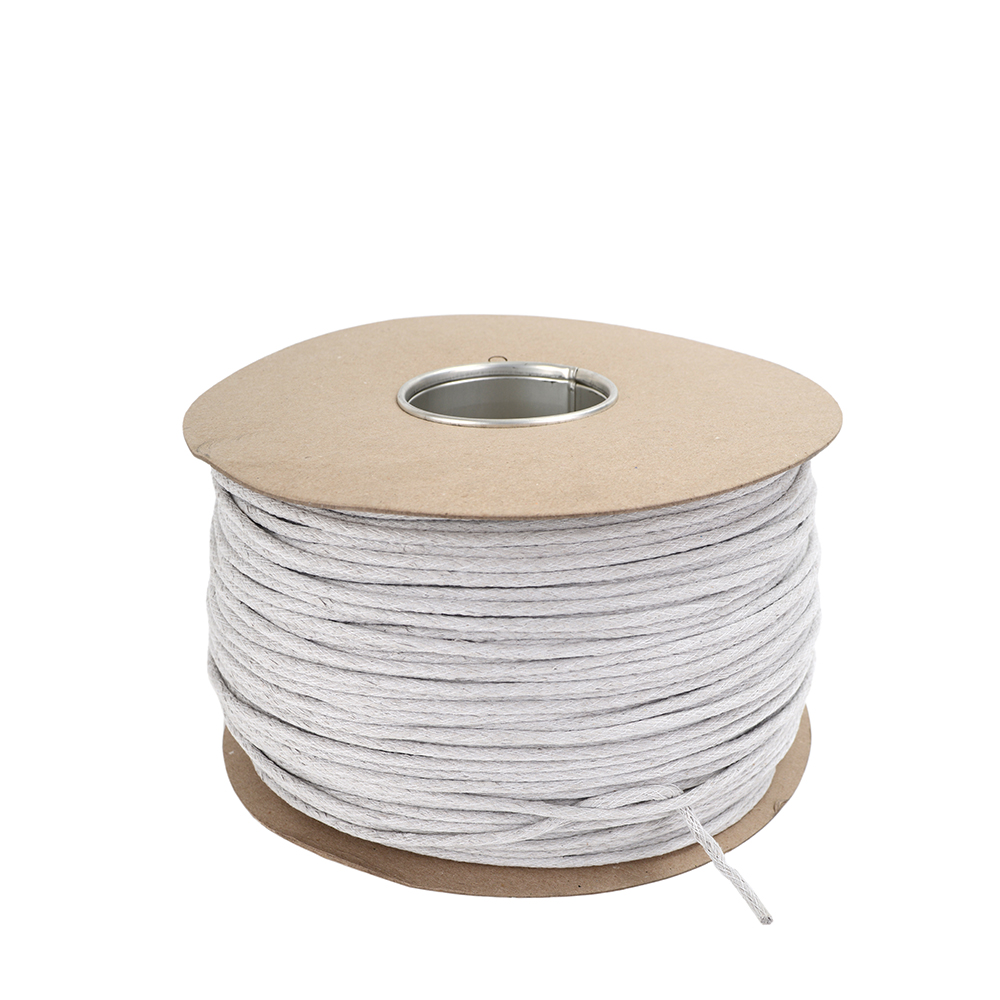
 Actual product photo
Original photos
The AI setting is for illustration. Use the original photos and specifications to choose your product.
Ref SF-3683
Paper piping cord
£43.10
No VAT added. Delivery for this item: £15.54. Standard delivery is free on orders of £240 or more. Delivery and returns
1. Choose your options
View this option on its own2. Choose quantity
Listed as in stock on 13 November 2026. Availability confirmed before payment.
Product details
Economical paper upholstery piping cord manufactured from 100% recycled paper with a synthetic yarn wrap, used for creating defined piped seams on suitable fixed furniture upholstery. Best suited to non-removable upholstery where the completed covering will not be machine washed, including fixed sofa and chair upholstery, seat panels, backs and decorative furniture seams. No. 5, 500 metre reel No. 6, 300 metre reel. Available individually or in quantities of 3 rolls. Use alongside Upholstery Sewing Threads and professional Upholstery Shears & Snips when producing fabric-covered piping.
Selected option details
1x 500mtr No5 paper piping cord
Full description and care
Paper Piping Cord for Fixed Furniture Upholstery
Paper Piping Cord provides an economical and consistent core for producing fabric-covered piping on suitable fixed furniture upholstery.
Manufactured from 100% recycled paper with a synthetic yarn wrap, it is designed primarily for applications where the finished upholstery is not intended to be removed and machine washed.
Available in:
- No. 5, 500 metre reel
- No. 6, 300 metre reel
Both sizes can be purchased individually or in quantities of 3 rolls.
Typical applications include:
- Fixed sofa upholstery
- Fixed chair upholstery
- Non-removable seat covers
- Fixed back panels
- Furniture facings
- Upholstered borders
- Decorative furniture seams
- Production upholstery
- Suitable headboard work
- Fixed upholstered panels
see the Piping Cords range for paper, cotton, washable and plastic piping options.
What Is Paper Piping Cord?
Paper piping cord forms the core inside a strip of upholstery fabric.
The fabric is wrapped around the cord and sewn close to it, creating a rounded piping edge which can then be incorporated into a furniture seam.
On fixed upholstery, piping can be used to define:
- Seat edges
- Back panels
- Arm facings
- Furniture borders
- Cushion-style fixed seats
- Decorative seams
- Upholstered panels
The cord itself remains concealed inside the covering fabric, while the finished piping produces a clearly defined edge.
Made from Recycled Paper
This piping cord is manufactured from 100% recycled paper surrounded by a synthetic yarn wrap.
The construction provides a practical piping core for suitable fixed upholstery and repeated furniture-production work.
Because the core is paper based, it should not be treated in the same way as a synthetic washable piping cord.
If the finished cover is likely to be removed and machine washed, choose a more appropriate product from the Piping Cords range.
Best Suited to Fixed Upholstery
Paper piping cord is particularly appropriate where the upholstery will remain permanently fitted to the furniture.
Suitable applications can include:
- Fixed seat upholstery
- Fixed sofa backs
- Armchair upholstery
- Chair facings
- Sofa borders
- Fixed upholstered panels
- Headboards
- Decorative fixed seams
For removable cushion covers, loose covers or applications likely to be washed, consider Washable Piping Cord or Pre-Shrunk Bleached Cotton Piping Cord instead.
The cleaning requirements of the complete upholstery should always be considered before selecting the piping core.
No. 5 or No. 6 Paper Piping Cord?
The product is available in two sizes:
No. 5, 500 metre reel
No. 6, 300 metre reel
These size numbers should be treated as product-size references rather than assumed universal millimetre measurements.
The final appearance of the piping will also depend on:
- Fabric thickness
- Number of fabric layers
- Sewing position
- How tightly the covering is wrapped
- Seam allowance
- Compression beneath the sewing-machine foot
Where the precise finished appearance matters, make a short sample using the actual cord, upholstery fabric and sewing setup before producing the complete job.
Making Fabric-Covered Piping
Paper piping cord is enclosed inside a strip of the chosen upholstery material before being sewn into the finished furniture seam.
A typical process is:
- Select the appropriate cord size.
- Cut the piping fabric into suitable strips.
- Join fabric strips where a longer length is required.
- Position the paper piping cord inside the strip.
- Fold the material around the cord.
- Sew close to the cord using a suitable piping or zipper foot.
- Position the completed piping into the required upholstery seam.
- Sew the final furniture seam accurately.
The stitching should hold the fabric closely around the cord without sewing through or damaging the cord itself.
Use with Upholstery Sewing Thread
Piped upholstery seams can contain several layers of fabric, so the thread needs to be appropriate for both the covering material and the sewing-machine setup.
Browse Upholstery Sewing Threads & Barbobs for professional sewing threads used in furniture manufacturing, cushion making and upholstery work.
When selecting thread, consider:
- Fabric weight
- Thread strength
- Needle size
- Sewing-machine capability
- Number of material layers
- Stitch appearance
- Thread colour
- Finished application
A machine that sews two flat layers of fabric comfortably may behave differently when sewing through the piping strip, main panel and adjoining seam allowances together.
Test the complete seam construction before beginning production work.
Cutting Piping Fabric
Accurate cutting helps produce more consistent piping.
Use professional Upholstery Shears & Snips for cutting fabric strips, trimming seams and removing loose thread ends.
Full-size upholstery or tailor's shears are particularly useful for:
- Long piping strips
- Furniture panels
- Seat borders
- Back panels
- Upholstery fabric
- Suitable vinyl
- General workroom cutting
Thread snips are useful beside the sewing machine for trimming thread ends and tidying completed seams.
Straight-Cut or Bias-Cut Piping Strips?
The direction in which the piping fabric is cut can influence how easily it follows the furniture shape.
Straight-cut strips can work well on straightforward linear seams.
Where piping needs to travel around curves and rounded furniture sections, bias-cut strips may provide greater flexibility depending on the fabric construction.
Consider:
- Furniture shape
- Curve radius
- Fabric stretch
- Pattern direction
- Material thickness
- Finished appearance
Patterned or striped upholstery fabric needs particular planning so that joins do not create an unnecessarily distracting interruption in the finished piping.
Joining Piping Strips
Long furniture seams may require several pieces of fabric to be joined before the piping is made.
Keep joins as flat as practical to avoid creating a noticeable lump in the finished piping.
Where possible, position joins away from:
- Front centres
- Highly visible furniture faces
- Sharp corners
- Major seam intersections
Trim unnecessary seam allowance carefully using suitable Upholstery Shears & Snips before enclosing the cord.
Paper Piping on Fixed Seat Upholstery
Paper cord is particularly useful for fixed seats where the upholstered cover is permanently attached to the furniture frame.
The piping can help define the transition between:
- Seat and border
- Seat and facing
- Back and side panel
- Arm and facing
- Upholstered panels
- Decorative furniture sections
Once the sewn upholstery has been positioned correctly, the remaining fabric can be secured to suitable frame timber using the appropriate furniture-fixing method.
Use with Upholstery Staple Guns
Although the piping itself is sewn rather than stapled, paper piping is frequently used on fixed upholstery where the surrounding fabric is subsequently secured to the furniture frame.
Browse Upholstery Staple Guns & Tackers for professional furniture-upholstery fastening equipment.
Standard-nose guns are suitable for many accessible frame sections, while long-nose staplers can be useful where fixing points sit within narrow channels, corners or deeper furniture sections.
Do not staple through the visible rounded piping merely to hold it in position.
The sewn piping establishes the decorative edge; the adjoining upholstery material is then fixed appropriately to the furniture frame.
Choosing the Correct Staples
Where the finished upholstery is being secured to timber, choose correctly matched Upholstery Staples for the selected staple gun.
Staple choice should take account of:
- Staple-gun model
- Staple series
- Material thickness
- Number of upholstery layers
- Timber depth
- Frame hardness
- Required staple leg length
Do not assume a longer staple will always give a better fixing.
The staple must be long enough to provide suitable holding power without creating unnecessary risk of penetrating through shallow rails or damaging adjoining furniture components.
Fixed Upholstery Build-Up
Paper piping cord often forms only one small part of a complete furniture upholstery job.
A typical fixed seat or furniture panel may involve:
- Foam Sheets or shaped foam for padding
- Polyester Wadding for softening the foam and creating a fuller finish
- Upholstery fabric or vinyl
- Paper piping cord
- Upholstery Sewing Thread
- Upholstery Staples
- Staple Guns & Tackers
Planning the whole construction together helps ensure that the piping size, foam profile, fabric thickness and fixing method work together properly.
Use Alongside Foam & Polyester Wadding
Where paper piping is being used around a fixed seat, back or furniture panel, the shape beneath it is often created using upholstery foam and wadding.
Browse Foam Sheets for furniture padding and shaped upholstery applications.
Where Polyester Wadding is applied over foam, use Status Fabrics Heavy Duty Spray Adhesive.
The adhesive helps keep the wadding securely positioned, prevents shifting or bunching during cover fitting and helps achieve a smooth, consistent finished upholstery surface.
The piping should follow the intended finished line of the upholstered component rather than being used to disguise an uneven foam or padding edge.
Paper Piping Cord Is Not Machine Washable
The paper core makes this product unsuitable for upholstery that will be routinely machine washed.
Even if the upholstery fabric itself is washable, moisture can affect the paper piping core.
For removable or washable covers, consider:
Washable Piping Cord, synthetic piping cord intended for suitable washable applications.
Pre-Shrunk Bleached Cotton Piping Cord, traditional cotton piping cord where a softer textile construction is preferred.
Always assess the complete cover. Fabric, thread, zip, piping and any other component must all be compatible with the proposed cleaning method.
Paper, Cotton or Plastic Piping Cord?
The Status Fabrics Piping Cords range provides several constructions for different upholstery requirements.
Choose Paper Piping Cord for:
- Fixed upholstery
- Non-removable furniture covers
- Production work
- Applications where machine washing is not required
Choose Braided Cotton Piping Cord for:
- Finer upholstery fabrics
- Scatter cushions
- Soft furnishings
- Smooth textile piping
Choose Pre-Shrunk Bleached Cotton Piping Cord for:
- Loose covers
- Removable cushions
- Traditional cotton piping
- Larger soft piping profiles
Choose Washable Piping Cord where:
- Removable covers may require washing
- A synthetic piping cord is preferred
- Moisture resistance is more important
Choose Somflex Plastic Piping Cord for heavier materials where a firmer and more defined piping profile is required.
Additional product information
Economical paper upholstery piping cord manufactured from 100% recycled paper with a synthetic yarn wrap, used for creating defined piped seams on suitable fixed furniture upholstery.
Best suited to non-removable upholstery where the completed covering will not be machine washed, including fixed sofa and chair upholstery, seat panels, backs and decorative furniture seams.
Available in:
No. 5, 500 metre reel No. 6, 300 metre reel
Available individually or in quantities of 3 rolls.
Use alongside Upholstery Sewing Threads and professional Upholstery Shears & Snips when producing fabric-covered piping.
see the Piping Cords range.
Range options and attributes
- Size
- No 5, No 6
- Quantity
- 3 Rolls, Each
Specifications are reproduced from supplied product data and have not been checked against a physical sample. Colours vary between screens and devices, so on-screen images may not exactly match the physical material.