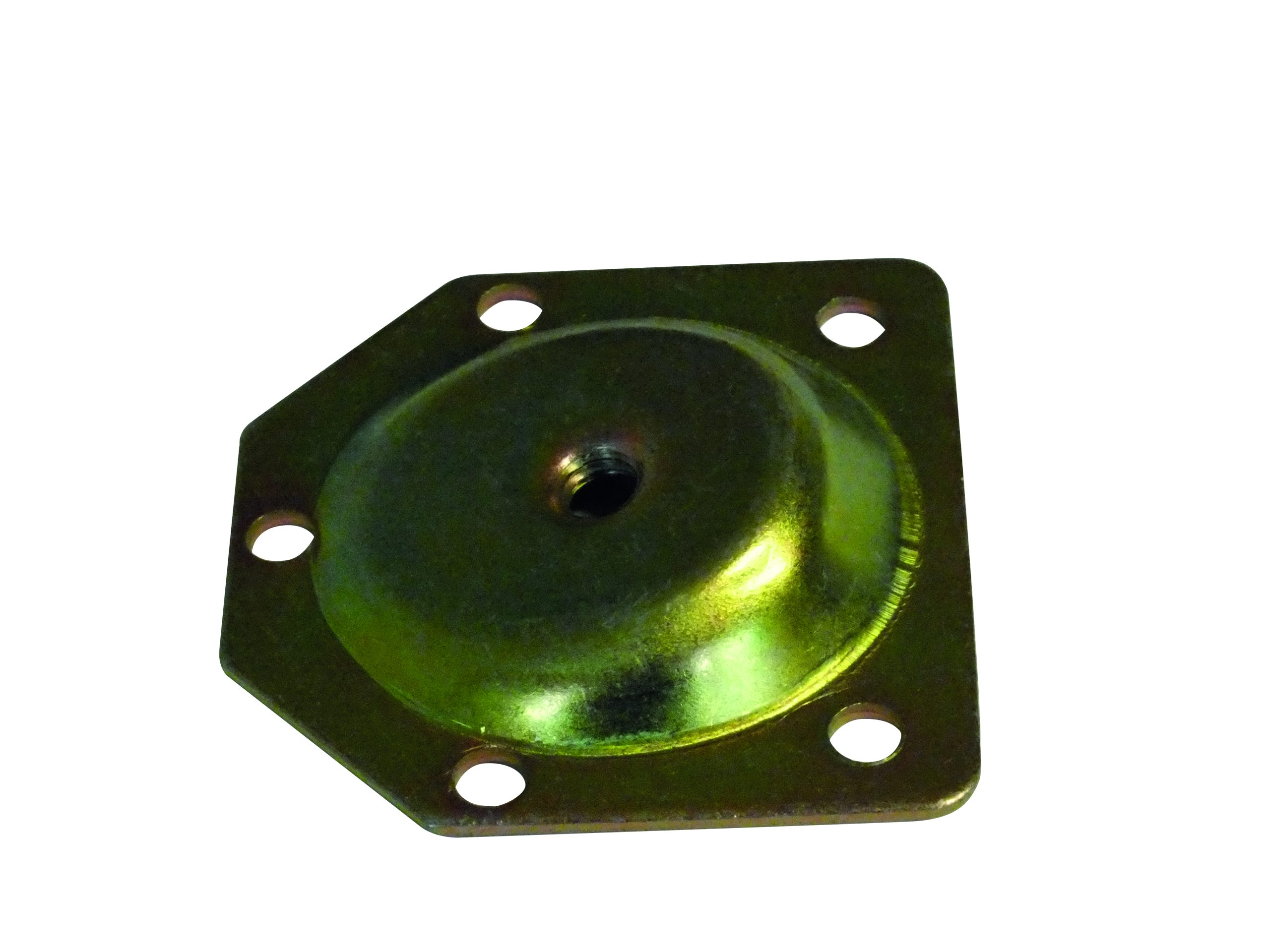
Ref SF-18564
M8 Furniture Leg Angled Bracket
£2.40
No VAT added. UK delivery £15.54, free on orders of £180 or more. Delivery and returns
Choose quantity
Listed as in stock on 13 November 2026. Availability confirmed before payment.
Product details
M8 furniture leg angled bracket made for fitting compatible threaded furniture legs at a deliberate outward angle or splay rather than vertically beneath the furniture. Use it for sofas, armchairs, footstools, upholstered benches and other furniture where angled or splayed legs form part of the finished design. The bracket fixes securely to a suitable timber furniture frame and accepts a compatible M8 threaded leg or fixing. Particularly useful for furniture manufacture, upholstery, restoration and replacement work where a straight furniture leg needs to be presented at an angle without modifying the leg itself. Use with compatible Wooden Furniture Feet or selected Metal Furniture Feet & Legs fitted with a M8 threaded connection. A Plastic 50mm Serrated Washer may also be useful with suitable wooden furniture legs. Supplied individually.
Full description and care
M8 Furniture Leg Angled Bracket for Splayed Furniture Legs
The M8 Furniture Leg Angled Bracket provides a simple and practical way of fitting a compatible threaded furniture leg at a deliberate outward angle rather than vertically beneath the furniture.
Sometimes described as a M8 angled leg bracket, splayed leg bracket, furniture leg mounting bracket or angled furniture foot fixing, it is particularly useful where angled legs form part of the furniture design.
The bracket attaches to a suitable structural furniture frame and provides a M8 threaded mounting point positioned to give the installed furniture leg its characteristic splayed appearance.
Create Angled or Splayed Furniture Legs
Angled furniture legs are commonly used on contemporary, retro and mid-century-inspired upholstered furniture.
Rather than manufacturing the leg itself with an angled fixing face, an angled mounting bracket allows a compatible straight threaded leg to be presented at the required angle.
This makes the bracket suitable for applications including:
- Sofas and settees
- Armchairs
- Lounge chairs
- Footstools
- Ottomans
- Upholstered benches
- Occasional furniture
- Bedroom furniture
- Furniture restoration
- Replacement furniture legs
- Bespoke furniture manufacture
The finished result can provide a more distinctive furniture profile than a conventional vertically mounted leg.
M8 Threaded Furniture Leg Connection
The bracket is designed to accept a compatible M8 threaded furniture leg or stud.
This makes it suitable for ready-threaded M8 furniture legs or wooden legs fitted with an appropriate M8 threaded fixing.
For wooden furniture legs that do not already have a M8 stud, the M8 Wood to Metal Dowel Screw provides a useful complementary component.
The wood-threaded end of the dowel screw can be installed into a suitable wooden leg while the exposed M8 machine thread engages with the angled bracket.
This creates a removable furniture-leg assembly while retaining the required splayed position.
Use it for Wooden Furniture Feet
Angled brackets work particularly well with suitable straight wooden furniture legs where an outward splay is required as part of the finished design.
Browse the Wooden Furniture Feet range for traditional, and replacement furniture-leg options.
When combining a wooden leg with an angled bracket, always check:
- Thread size
- Threaded stud length
- Diameter of the leg shoulder
- Available tightening clearance
- Finished direction of the leg
- Available frame fixing area
- Furniture height after fitting
The leg must have a compatible M8 threaded fixing.
A visually suitable furniture leg with a M10 or other thread will not fit correctly simply because the overall leg dimensions appear similar.
Suitable for Metal Furniture Legs
The bracket may also be used with compatible threaded metal furniture legs where the fixing and mounting arrangement are suitable.
Browse Metal Furniture Feet & Legs for furniture-leg options.
Always confirm the actual thread before ordering.
M8 and M10 fittings are not interchangeable.
Why Use an Angled Leg Bracket?
Using a dedicated angled bracket provides a more controlled way of producing splayed furniture legs than attempting to improvise an angled fixing within the timber frame.
Benefits include:
- Creates a deliberate furniture-leg angle
- Allows suitable straight legs to be used in a splayed arrangement
- Provides a M8 threaded fixing
- Furniture legs remain removable
- Useful for production furniture
- Suitable for furniture repairs and restoration
- Allows worn or damaged brackets to be replaced
- Simplifies fitting compared with modifying individual legs
- Helps achieve consistent leg presentation across the furniture
The bracket also allows the leg to be removed for transport, delivery or replacement without permanently altering the furniture frame.
Positioning Angled Furniture Legs
Correct bracket orientation is particularly important.
Because the bracket deliberately changes the direction of the furniture leg, rotating the bracket changes the direction in which the leg splays.
Before fixing the bracket permanently, decide whether each leg should angle:
- Forward
- Backward
- Outwards
- Diagonally towards the furniture corner
The correct arrangement depends on the design of the furniture.
For a four-legged sofa or chair, front and rear brackets may require different orientations.
Mark all bracket positions and directions before drilling.
Checking the layout from both above and below the furniture can help avoid fitting one bracket in the wrong direction.
Consistent Leg Angles Matter
Where several angled legs are being fitted to the same piece of furniture, consistency is important.
All corresponding brackets should be positioned in the same relationship to the furniture frame.
Poor alignment can result in:
- Uneven furniture appearance
- Different leg angles
- Uneven floor contact
- Furniture rocking
- Excessive stress on one leg
- Misalignment between the frame and leg shoulder
Where several identical furniture frames are being manufactured, using a template or drilling jig can help achieve repeatable bracket positions.
Fix to Structural Furniture Timber
The bracket should be attached to sound structural material capable of supporting the furniture and its expected load.
Suitable fixing positions would normally be on furniture-frame rails or reinforced mounting areas.
Do not rely solely on:
- Base cloth
- Upholstery cardboard
- Thin fibreboard
- Decorative panel material
- Foam
- Fabric
- Damaged or crumbling timber
The bracket is only as secure as the frame and fasteners supporting it.
Where the original mounting area has been damaged, repair or reinforce the furniture frame before installing a replacement bracket.
Selecting Suitable Fixing Screws
Use screws appropriate to:
- The bracket fixing holes
- Timber type
- Frame thickness
- Expected furniture load
- Available screw depth
The screws must be long enough to secure the bracket properly without passing through a visible furniture surface or interfering with other furniture components.
Before drilling or fixing, check for:
- Springs
- Zig-zag spring clips
- Webbing
- Staples
- Existing screws
- Frame joints
- Upholstery materials
- Other furniture hardware
Avoid positioning new screws into weakened or enlarged existing holes.
Check the Furniture Before Final Use
Once all brackets and legs have been fitted, place the furniture upright on a level surface.
Check that:
- All legs contact the floor
- The furniture does not rock
- Matching legs have consistent angles
- Each bracket remains secure
- Furniture legs are fully threaded into their fittings
- No leg interferes with another component
- The furniture sits at the intended height
- The frame remains level
Any instability should be corrected at the fixing or frame rather than simply loosening one furniture leg to compensate.
A partially engaged threaded leg can place unnecessary stress on both the thread and bracket.
M8 Angled Bracket or Straight Furniture Fixing?
Not every furniture design requires an angled mounting bracket.
Where the leg needs to sit vertically beneath the furniture, a conventional threaded fixing may be more suitable.
M8 D Nuts
a M8 D Nut screws directly into a prepared hole in suitable timber.
This creates a compact M8 threaded anchor and can be particularly useful where access is available from only one side of the furniture frame.
M8 3 Point Fixing Nut
The M8 3 Point Fixing Nut provides a M8 threaded fixing mounted on a broad plate secured through three screw positions.
This can be useful where a straight leg requires a positively screw-fixed mounting plate.
M8 T Nuts
M8 T Nuts provide another traditional furniture-leg fixing method using a threaded barrel, flange and four gripping prongs.
The correct fixing depends on whether the furniture leg needs to sit straight or angled and on the construction of the furniture frame.
Use with a M8 Wood to Metal Dowel Screw
The M8 Wood to Metal Dowel Screw is particularly useful when creating a threaded connection in a suitable wooden furniture leg.
One end has a wood-screw thread for installation into the leg, while the opposite end provides a M8 machine thread.
This allows a wooden leg to be screwed into the angled bracket while remaining removable.
When fitting a dowel screw into a wooden leg:
- Mark the centre accurately
- Drill an appropriate pilot hole
- Keep the fixing square to the leg
- Ensure sufficient timber surrounds the hole
- Avoid damaging the exposed M8 thread
- Check the exposed thread length before final assembly
Correct alignment of the dowel screw is especially important when the bracket is already introducing an intentional angle.
Serrated Washers for Suitable Wooden Legs
A Plastic 50mm Serrated Washer can be used with suitable threaded wooden furniture legs where the leg and bracket arrangement allows.
Positioned between the top of the leg and furniture base, the washer can help increase friction and reduce the tendency for a threaded wooden leg to work loose.
It can also help protect upholstery fabric or covering materials from direct rubbing against the top of the furniture leg.
The washer should complement a correctly fitted bracket and sound threaded connection rather than being used to compensate for a loose or damaged fixing.
Additional product information
M8 furniture leg angled bracket made for fitting compatible threaded furniture legs at a deliberate outward angle or splay rather than vertically beneath the furniture.
Use it for sofas, armchairs, footstools, upholstered benches and other furniture where angled or splayed legs form part of the finished design. The bracket fixes securely to a suitable timber furniture frame and accepts a compatible M8 threaded leg or fixing.
Particularly useful for furniture manufacture, upholstery, restoration and replacement work where a straight furniture leg needs to be presented at an angle without modifying the leg itself.
Use with compatible Wooden Furniture Feet or selected Metal Furniture Feet & Legs fitted with a M8 threaded connection.
For wooden legs requiring a M8 threaded stud, see the M8 Wood to Metal Dowel Screw. A Plastic 50mm Serrated Washer may also be useful with suitable wooden furniture legs.
For alternative straight furniture-leg fixing methods, compare the M8 D Nuts and M8 3 Point Fixing Nut, or see the T Nuts, D Nuts & Fixings range.
Supplied individually.
Specifications are reproduced from supplied product data and have not been checked against a physical sample. Colours vary between screens and devices, so on-screen images may not exactly match the physical material.