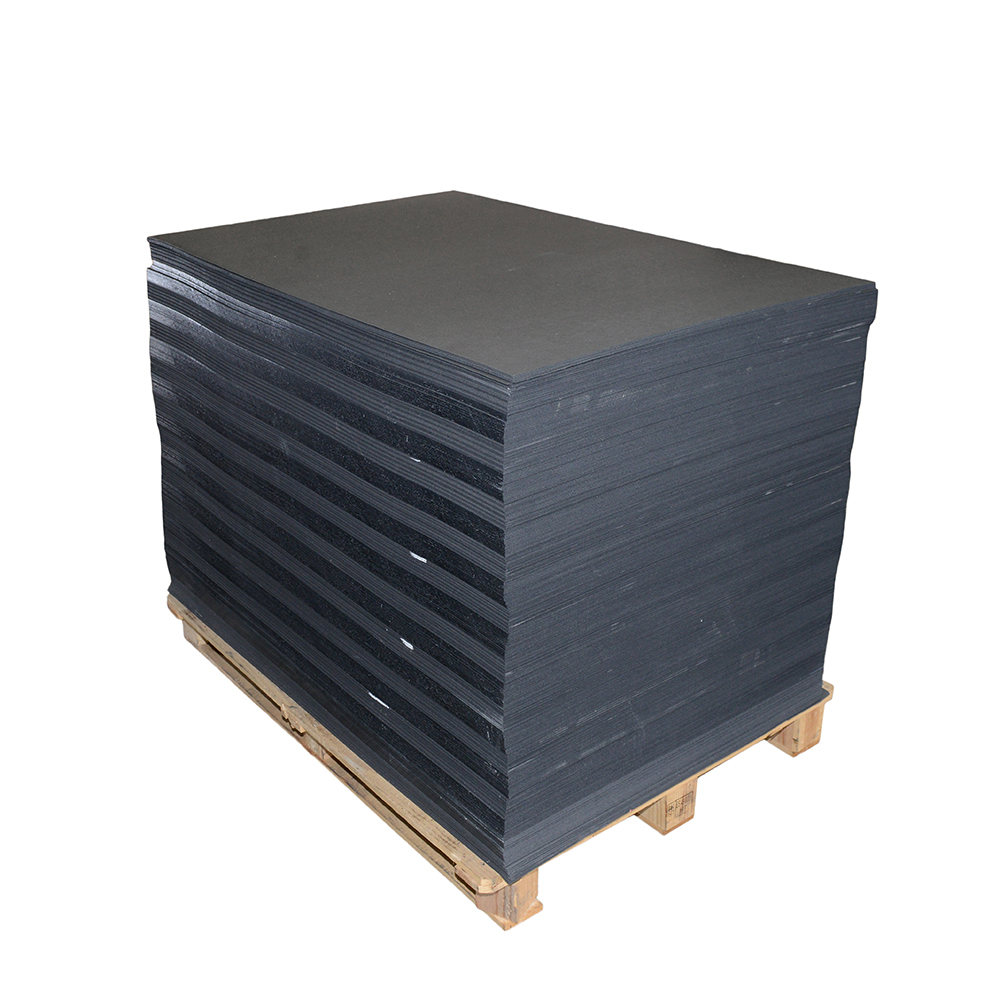
 Actual product photo
Original photos
The AI setting is for illustration. Use the original photos and specifications to choose your product.
Ref SF-2835
Fibre board sheet 1240x780x 1.5mm (10 sheets)
£104.00
No VAT added. Delivery for this item: £15.54, plus a £12.00 bulky item charge once per order. The £15.54 is free on orders of £240 or more. The extra charge still applies. Delivery and returns
Choose quantity
Listed as in stock on 13 November 2026. Availability confirmed before payment.
Product details
1.5mm upholstery fibreboard, also commonly referred to as millboard, for furniture backs, outside arms, facings, shaped panels and template making. Measuring approximately 1240 x 780 x 1.5mm, this firmer board provides more body than lightweight upholstery cardboard while retaining useful flexibility for suitable profiled and gently curved furniture sections. Use it for professional upholstery, furniture manufacturing, restoration and repeat production work. Use alongside Foam Sheets, Profiles & Edge Rolls and Polyester Wadding when building complete upholstered panels, backs and arms. Supplied in a pack of 10 sheets.
Full description and care
1.5mm Upholstery Fibreboard / Millboard Sheets
1.5mm Upholstery Fibreboard Sheets provide a firmer panel material for furniture manufacturing, reupholstery, restoration, shaped panel work and template making.
Also commonly referred to as millboard, each sheet measures approximately 1240mm x 780mm x 1.5mm and is supplied in a pack of 10 sheets.
Compared with lightweight upholstery cardboard, the 1.5mm fibreboard provides additional body and panel firmness while still retaining enough flexibility for many suitable shaped and gently curved furniture applications.
Typical uses include:
- Outside sofa and chair backs
- Outside arms
- Upholstered furniture panels
- Arm facings
- Shaped furniture sections
- Headboard components
- Concealed furniture panels
- Suitable gentle curves
- Upholstery templates
- Production patterns
- Prototype work
- Panel reinforcement where modest rigidity is required
see the Cardboard & Fibreboard range for alternative sheet thicknesses and upholstery cardboard products.
Fibreboard for Furniture Backs & Outside Arms
The 1.5mm board is particularly useful where an upholstery panel needs more substance than thin cardboard without becoming excessively rigid.
On suitable furniture, it can provide a smooth, firm foundation across outside backs, arms and other covered panel sections.
The board should be cut accurately to the required furniture profile and supported appropriately by the underlying frame.
Potential applications include:
- Sofa outside backs
- Armchair backs
- Outside arms
- Headboard panels
- Furniture facings
- Covered side panels
- Decorative upholstered sections
The finished panel should sit smoothly without projecting beyond the frame or creating ridges that may remain visible beneath the final upholstery covering.
A Firmer Alternative to Upholstery Cardboard
The correct board depends on the amount of firmness and flexibility required.
The lighter 1.2mm Upholstery Cardboard Sheets are particularly useful where greater flexibility, lighter panel work or template making is required.
The 1.5mm fibreboard provides a step up in panel firmness while remaining suitable for many gently shaped applications.
For work requiring greater rigidity, consider the 3mm Fibreboard Sheets.
A thicker board is not automatically the better choice.
Consider whether the finished panel needs to:
- Follow a curve
- Span a frame opening
- Remain flat
- Support padding
- Accept suitable fixings
- Be removable
- Follow a shaped furniture profile
- Provide a reusable production template
Choose the board according to the finished furniture construction rather than simply selecting the thickest option.
Use on Shaped & Profiled Furniture
One of the advantages of 1.5mm fibreboard is its balance between firmness and workability.
It can be used on suitable shaped areas where a more surface is needed but the panel still has to follow a gentle furniture profile.
Typical applications may include:
- Shaped chair backs
- Curved outside backs
- Arm panels
- Headboard sections
- Furniture facings
- Decorative side panels
- Bespoke upholstered panels
Do not force the board around an excessively tight radius.
If the fibreboard begins to buckle, crease or place excessive load on its fixing points, a different construction method or more flexible material may be required.
Measure & Mark the Panel Accurately
Accurate measuring is particularly important with fibreboard because a poorly shaped panel can affect the final line of the furniture.
Use suitable Measuring & Marking Tools to establish:
- Overall panel dimensions
- Centre lines
- Furniture-frame positions
- Curves and profiles
- Fixing locations
- Cut-outs
- Left- and right-hand orientation
- Reference points for repeat production
For straight edges and long cutting lines, browse Rulers & Tape Measures.
Rigid aluminium rules are particularly useful for transferring straight dimensions onto fibreboard, while flexible tape measures are helpful when working around curved or irregular furniture sections.
Always check the dimensions against the actual furniture before making the final cut.
Cutting 1.5mm Fibreboard
The board can be cut using an appropriate sharp cutting tool and suitable work surface.
For straight and detailed work, the Retractable Blade Craft Knife provides a useful general workroom cutting option.
Browse Knives & Foam Cutters for suitable knives, replacement blades and specialist upholstery cutting tools.
For long straight cuts:
- Mark the required line accurately.
- Support the sheet on a suitable cutting surface.
- Use a rigid straight edge where appropriate.
- Make controlled passes with a sharp blade.
- Avoid forcing a blunt blade through the board.
- Check the panel against the furniture before final fitting.
For shaped work, remove smaller amounts of material progressively rather than over-cutting the panel at the first attempt.
Fibreboard for Upholstery Templates
The 1.5mm board can also be used for creating robust upholstery and production templates.
Its additional firmness makes it useful where a template may be reused many times.
Templates can be produced for:
- Foam components
- Furniture panels
- Arms
- Backs
- Headboards
- Upholstery fabric
- Production components
- Repeated furniture models
- Shaped or asymmetric sections
Once a template has been checked against the furniture, clearly mark:
- Product or furniture model
- Component name
- Left or right side
- Centre line
- Finished dimensions
- Orientation
- Any allowances required
A well-made fibreboard template can improve consistency and reduce repeated measuring during furniture manufacture.
Use Fibreboard Templates with Foam Sheets
A checked fibreboard template can be transferred onto suitable Foam Sheets when producing shaped padding or furniture components.
This is useful for:
- Arm padding
- Shaped backs
- Headboards
- Furniture facings
- Seat sections
- Infill pieces
- Bespoke upholstery components
- Repeat production foam parts
The template establishes the shape while the selected foam grade and thickness determine the comfort, support and finished profile.
For thicker upholstery foam, use a cutting method appropriate to the foam depth rather than attempting to cut deep foam with a short craft-knife blade.
Customers who require finished foam components can also use Status Fabrics' Foam Cut to Size service.
Use with Upholstery Profiles & Edge Rolls
Fibreboard is frequently used alongside Upholstery Profiles & Edge Rolls when building furniture backs, arm facings, borders and shaped upholstered panels.
The fibreboard forms the panel surface while the edge roll or profile helps create the required contour around the frame.
Depending on the furniture construction, profiles can help:
- Form rounded edges
- Protect hard timber edges
- Shape arm facings
- Establish seat-front profiles
- Create consistent production shapes
- Blend board edges into adjoining padding
- Support foam and covering materials
Plan the complete upholstery build-up before cutting the panel.
A typical construction may include:
Furniture frame Fibreboard panel Edge profile Foam Polyester wadding Fabric or vinyl
Each layer adds thickness, so the finished dimensions should be considered before the panel and padding are permanently fitted.
Blending Fibreboard into Upholstery Foam
Where fibreboard meets an upholstered or padded section, the transition should be smooth enough that the board edge does not become visible through the covering material.
Suitable Foam Sheets can be shaped, tapered or positioned to create a gradual transition between the panel, frame and adjoining padded areas.
Check the completed surface by both sight and touch.
If a pronounced ridge can be felt before the covering material is fitted, it is likely to remain visible through the finished upholstery.
Adding Polyester Wadding
Where a softer outer finish is required, Polyester Wadding can be used over suitable foam and padded furniture sections.
Wadding can help:
- Soften transitions
- Blend foam into edge profiles
- Reduce minor surface irregularities
- Create a fuller upholstered appearance
- Prevent hard foam edges showing beneath fabric
- Produce a smoother final furniture surface
Where polyester wadding is fitted over foam, bond it using Status Fabrics Heavy Duty Spray Adhesive.
This helps keep the wadding securely positioned, prevents shifting or bunching while the cover is being fitted and helps achieve a smooth, consistent finished upholstery surface.
Wadding should be used to finish a correctly prepared furniture build-up rather than to disguise badly fitted board, large gaps or poorly aligned profiles.
Fixing Fibreboard to Furniture
The fixing method will depend on the furniture frame, panel design and intended application.
Where staple fixing is appropriate, use a suitable Upholstery Staple Gun or Tacker with correctly matched Upholstery Staples.
Before fixing the panel permanently:
- Check that the frame timber is sound.
- Confirm the board fits the required profile.
- Check that mechanisms and fittings remain accessible.
- Make sure the panel is correctly supported.
- Confirm the selected fixing will not penetrate where it could cause damage.
- Check that the finished panel remains flat and correctly aligned.
Do not use fibreboard as a substitute for damaged or missing structural frame timber.
Fibreboard & Tacking Strips
Once an outside back or arm panel has been formed, the final fabric may need a clean concealed finishing edge.
These include cardboard and metal systems designed to help create neat fabric edges on furniture backs, outside arms and panels.
For straight concealed edges, the 1/2" x 40" Cardboard Tack Strips provide a convenient pre-cut option for professional upholstery work.
1.5mm or 3mm Fibreboard?
The two fibreboard thicknesses serve slightly different requirements.
Choose 1.5mm fibreboard where:
- Some flexibility is useful
- The panel must follow a gentle profile
- A lighter board is preferable
- Modest panel firmness is required
- The material is being used for templates
- The board forms part of a layered upholstery construction
Choose 3mm Fibreboard where:
- Greater panel rigidity is required
- The panel is predominantly flat
- A more backing is appropriate
- Greater resistance to flexing is desirable
Always select according to the furniture construction and finished application rather than thickness alone.
Additional product information
1.5mm upholstery fibreboard, also commonly referred to as millboard, for furniture backs, outside arms, facings, shaped panels and template making.
Measuring approximately 1240 x 780 x 1.5mm, this firmer board provides more body than lightweight upholstery cardboard while retaining useful flexibility for suitable profiled and gently curved furniture sections.
Use it for professional upholstery, furniture manufacturing, restoration and repeat production work.
Use alongside Foam Sheets, Profiles & Edge Rolls and Polyester Wadding when building complete upholstered panels, backs and arms.
Supplied in a pack of 10 sheets.
see the Cardboard & Fibreboard range.
Specifications are reproduced from supplied product data and have not been checked against a physical sample. Colours vary between screens and devices, so on-screen images may not exactly match the physical material.