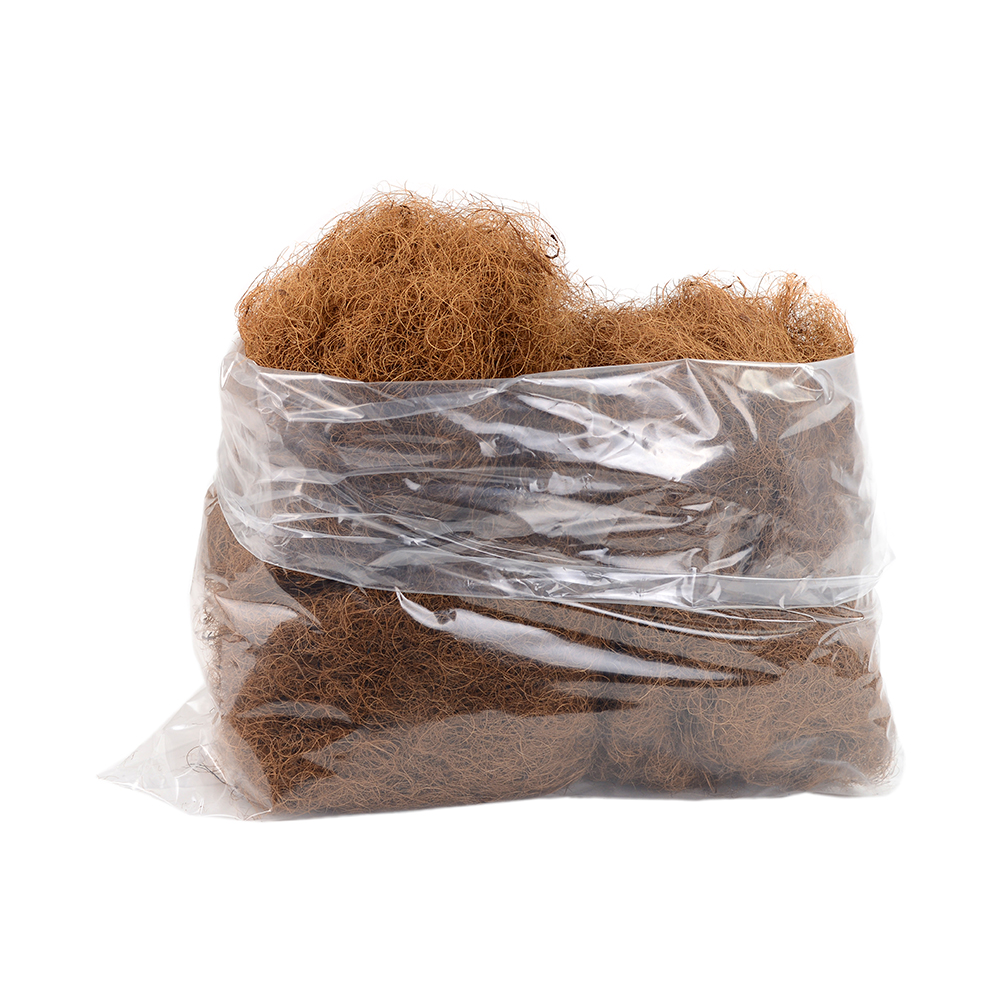
 Actual product photo
Original photos
The AI setting is for illustration. Use the original photos and specifications to choose your product.
Ref SF-9778
Bag Ginger Coir Fibre
£68.80
No VAT added. UK delivery £15.54, free on orders of £180 or more. Delivery and returns
1. Choose your options
2. Choose quantity
Listed as in stock on 13 November 2026. Availability confirmed before payment.
Product details
Traditional ginger coir fibre upholstery filling made from 100% curled coconut husk fibre. It is naturally tough, springy and resilient, coir is used for building firm foundation layers in chairs, sofas, mattresses and furniture restoration projects. 100% natural curled coconut fibre. Firm, coarse and resilient upholstery filling. For traditional seat foundations. Suitable for chairs, sofas, backs, arms and mattress work. Use it for professional and traditional upholstery. Available in: 3.25kg, 5kg and 10kg bags
Full description and care
Ginger Coir Fibre for Traditional Upholstery
The ginger coir fibre is a traditional loose upholstery filling made from curled fibres taken from coconut husks.
Strong, coarse and naturally springy, coir is particularly useful where upholstery needs firmness, structure and shape rather than the soft, plump feel associated with feather or polyester fibre.
It is widely used in traditional furniture restoration, chair and sofa rebuilding, seat foundations, upholstered arms and mattress construction.
What Is Ginger Coir Fibre?
Coir is the natural fibre found around the outer husk of a coconut.
The fibres are processed and curled to create a loose, resilient filling that can be teased, shaped and built into traditional upholstery.
Ginger coir is valued because it combines:
- Firm support
- Natural spring and resilience
- Coarse structure
- Good shape-building properties
- Long-lasting performance
- A naturally derived plant fibre
Because coconut husk is a renewable agricultural material, coir is also a useful choice for projects where customers prefer traditional, naturally derived upholstery fillings.
Traditional Chair & Sofa Restoration
Ginger coir is particularly well suited to traditional upholstery and furniture restoration.
It can be worked by hand to build the shape and firmness required before softer finishing layers are applied.
Typical applications include:
- Antique chair restoration
- Dining chair seats
- Traditional armchairs
- Sofa restoration
- Footstools
- Upholstered backs and arms
- Seat foundation layers
- Furniture rebuilding
- Traditional mattress construction
- Re-padding older furniture
For the full range of natural and traditional fillings, browse Hair & Coir.
Coir Fibre for Seat Foundations
One of the principal uses for loose coir is building a strong upholstery foundation.
In traditional seating, coir can be placed above the supporting spring or webbing structure and worked into the required shape.
Its coarse, resilient fibres help produce:
- Firmness
- Defined edges
- Seat shape
- Structural body
- Support beneath softer upper layers
For restoring the underlying support system, see the Springs & Webbing range.
Working & Shaping Loose Coir
Unlike a pre-formed foam pad or rubberised coir sheet, loose ginger coir can be teased apart and distributed by hand.
This makes it particularly useful when rebuilding traditionally shaped furniture where different areas require different amounts of filling.
The fibre can be worked into corners, edges and shaped sections before being secured beneath hessian or other upholstery layers.
Traditional hand upholstery often requires specialist tools for controlling and positioning the filling. see Needles, Pins & Skewers range for regulators, curved needles, skewers and other upholstery tools.
Ginger Coir vs Hair & Coir Mix
Straight ginger coir is firmer and coarser than a hair and coir blend.
Choose ginger coir fibre when:
- Firm foundation support is required
- Building or rebuilding a traditional seat
- Strong shape and structure are important
- A coarse natural upholstery filling is suitable
Choose a 50/50 hair and coir mix where a slightly softer and more flexible traditional filling is preferred.
see the 50/50 Hair & Coir Fibre Mix for an alternative combining the structure of coir with the resilience of animal hair.
Ginger Coir vs Mixed Animal Hair
Animal hair provides a finer and generally softer traditional filling than straight coir.
Coir is normally selected where firmer structure and foundation support are needed, while animal hair is useful for producing resilient upholstery layers with greater softness.
For a more refined traditional hair filling, see BV509 Mixed Animal Hair.
Loose Coir vs Rubberised Coir
Both products use coir fibre, but they are intended for slightly different methods of working.
Loose ginger coir fibre can be teased, shaped and built by hand, making it particularly useful for traditional upholstery and irregular furniture forms.
Rubberised coir is supplied as a consistent sheet and is often more convenient where an even layer of predetermined thickness is required.
For sheet-based applications, see the Rubberised Coir Fibre Sheet.
Building a Traditional Upholstery Seat
A traditional seat may use several different materials working together.
Depending on the furniture, these can include:
- Jute webbing
- Upholstery springs
- Springing twine
- Hessian
- Coir or animal hair filling
- Felt or wadding
- Calico
- Top fabric
- Tacks and upholstery fixings
For spring tying, stitching and traditional construction, browse Sewing Threads & Twines.
For foundation materials, see Springs & Webbing.
For hand shaping and stitching tools, explore Needles, Pins & Skewers.
Natural Coconut Fibre Upholstery Filling
Ginger coir is produced from coconut husk, making it a naturally derived plant-based upholstery material.
Rather than being manufactured as a synthetic loose filling, the useful fibre from the coconut husk is processed into a tough, resilient upholstery material.
This makes coir particularly for:
- Traditional upholstery
- Furniture restoration
- Natural-material projects
- Heritage furniture work
- Mattress making
- Customers looking to reduce reliance on synthetic fillings
Its key advantage, however, remains performance: coir is naturally coarse, resilient and exceptionally useful for creating firm upholstery structures.
Available Bag Sizes
Ginger coir fibre is available in:
- 3.25kg
- 5kg
- 10kg
The amount required will depend on the furniture size, construction, depth of filling and how firmly the material is packed.
For larger restoration work or help choosing the most appropriate filling, contact us.
Additional product information
Traditional ginger coir fibre upholstery filling made from 100% curled coconut husk fibre. It is naturally tough, springy and resilient, coir is used for building firm foundation layers in chairs, sofas, mattresses and furniture restoration projects.
- 100% natural curled coconut fibre
- Firm, coarse and resilient upholstery filling
- for traditional seat foundations
- Suitable for chairs, sofas, backs, arms and mattress work
- Available in 3.25kg, 5kg and 10kg bags
- Use it for professional and traditional upholstery
Range options and attributes
- Size
- 10kg, 3.25kg, 5kg
Specifications are reproduced from supplied product data and have not been checked against a physical sample. Colours vary between screens and devices, so on-screen images may not exactly match the physical material.