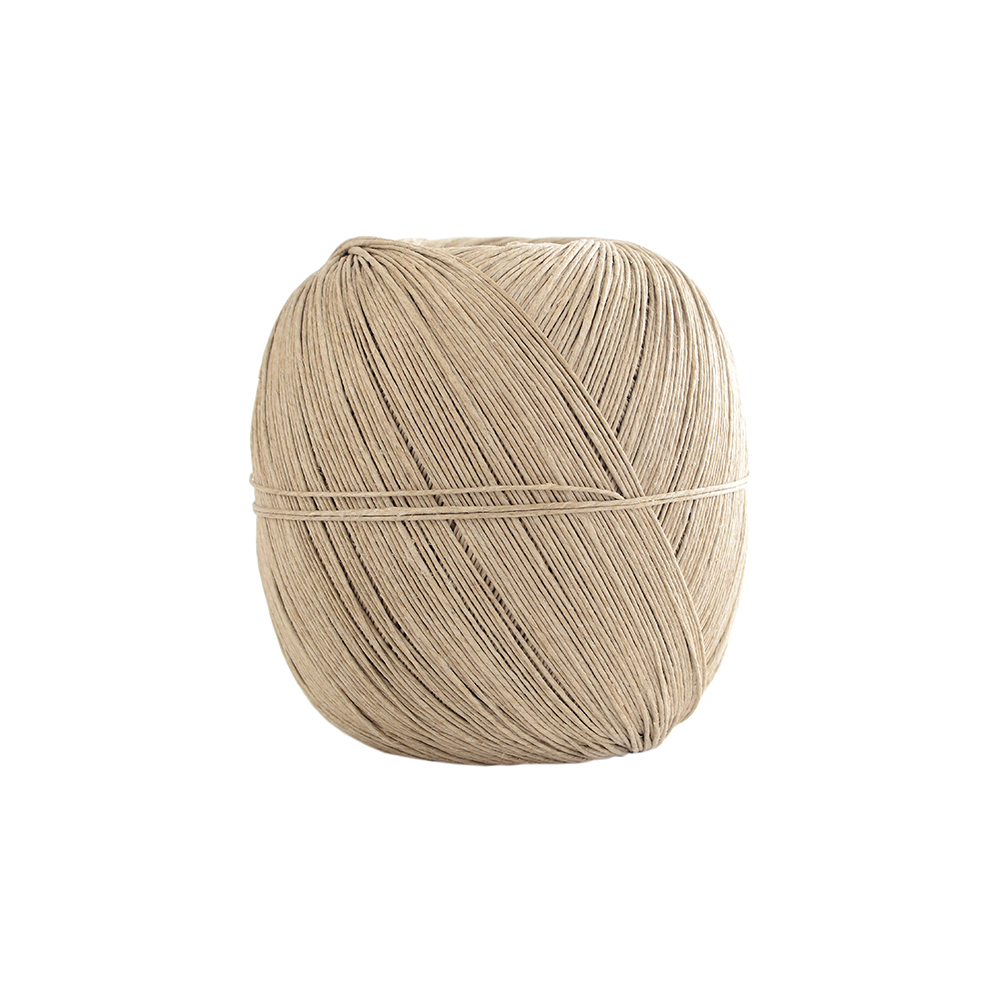
 Actual product photo
Original photos
The AI setting is for illustration. Use the original photos and specifications to choose your product.
Ref SF-3677
Everlasto stitching twine 226gsm ball
£16.40
No VAT added. Delivery for this item: £15.54. Standard delivery is free on orders of £240 or more. Delivery and returns
1. Choose your options
View this option on its own2. Choose quantity
Listed as in stock on 13 November 2026. Availability confirmed before payment.
Product details
Everlasto Flax Stitching Twine supplied in a 226g ball for traditional upholstery, furniture restoration and professional hand sewing. Available in No. 3, No. 4, No. 5 and No. 6. The lighter No. 3 and No. 4 twines are suitable for traditional edge stitching and general hand upholstery, while the heavier No. 5 and No. 6 sizes are better suited to blind stitching and sewing springs into position. Use it for working with Upholstery Hessian, Hair & Coir and traditional Upholstery Felts.
Full description and care
Everlasto Flax Stitching Twine, 226g Ball
Everlasto Stitching Twine is a traditional flax upholstery twine for hand stitching, furniture restoration and traditional furniture construction.
Supplied in a 226g ball, it is available in four sizes:
- No. 3
- No. 4
- No. 5
- No. 6
The different sizes allow the upholsterer to choose a finer or heavier twine according to the stitching operation, upholstery materials and needle being used.
see the Upholstery Twines range for stitching twines, spring-lashing cord, buttoning twine and slipping thread.
Choosing No. 3, 4, 5 or 6
The lighter No. 3 and No. 4 sizes are particularly suited to:
- Traditional edge stitching
- General hand upholstery
- Hand sewing through suitable hessian
- Securing traditional filling layers
- Furniture restoration
The heavier No. 5 and No. 6 sizes are better suited to:
- Blind stitching
- Sewing springs into position
- Heavier hand-upholstery work
- Securing more upholstery layers
The twine should be selected according to the job rather than simply choosing the heaviest available size.
A heavier twine also requires a suitably sized needle eye and will naturally create a more stitch and knot.
Traditional Edge Stitching
Everlasto flax twine is well suited to traditional stitched-edge upholstery.
Edge stitching is used to shape and control filling materials beneath the finished cover and can help create:
- Firm seat fronts
- Rounded chair and sofa arms
- Traditional rolled edges
- Shaped furniture backs
- Defined furniture borders
- Controlled transitions between filling layers
A traditional stitched edge commonly combines Upholstery Hessian with Hair & Coir Fillings and suitable Upholstery Felts.
The filling should first be distributed evenly, with the stitching then used to retain and progressively shape the required profile.
Stitching Through Upholstery Hessian
Hessian provides an important foundation within many traditional upholstery constructions.
When using stitching twine through hessian, the material should be securely fitted and capable of carrying the tension generated by the stitches.
The aim is to control the filling without pulling so tightly that the twine cuts into or distorts the hessian.
During edge stitching, regularly check:
- Shape
- Firmness
- Stitch spacing
- Twine tension
- Filling distribution
- Symmetry
Consistent tension is more useful than simply pulling every stitch as tightly as possible.
Browse the full Hessian range for traditional furniture upholstery and restoration work.
Working with Hair, Coir & Felt
Traditional upholstery commonly combines stitching twine with natural or layered filling materials.
Everlasto can be used for suitable hand-stitching operations involving:
- Hair fillings
- Coir
- Upholstery felt
- Traditional seat fillings
- Arm and back fillings
- Restoration work
Browse Hair & Coir for traditional upholstery fillings and Upholstery Felts for suitable padding and layered filling products.
A Regulator Needle can also be used to arrange and redistribute suitable filling materials while building and shaping the upholstered edge.
Sewing Springs to Hessian
The heavier No. 5 and No. 6 Everlasto twines can be used for suitable spring work, including sewing spring tops to the hessian covering a traditional spring unit.
Browse Double-Cone Upholstery Springs for traditional sprung chairs, sofas, footstools and furniture restoration.
Traditional double-cone springs are commonly built over a foundation of Jute Upholstery Webbing before being lashed and covered with hessian.
The stitches securing the spring tops should help retain the established spring positions without pulling the hessian excessively down between the springs.
Stitching Twine Is Not Spring-Lashing Cord
Sewing springs to hessian and lashing the actual spring unit are two different operations.
For lashing double-cone springs and controlling their position, height and movement within the furniture frame, use Laidcord.
Laidcord is a specialist traditional spring-lashing cord and should not be treated as interchangeable with ordinary stitching twine.
A traditional sprung seat may therefore use:
- Jute Webbing beneath the springs
- Double-Cone Springs for the sprung foundation
- Laidcord for spring lashing
- Upholstery Hessian over the spring unit
- Everlasto stitching twine for suitable hand stitching and spring-securing work
This is a good example of why different upholstery twines have specific jobs within traditional furniture construction.
Choose the Correct Upholstery Needle
Needle choice depends on the twine thickness, upholstery depth and how much access is available around the work.
Browse Curved Upholstery Needles for work where the needle needs to enter and return from the same face of the upholstery.
For areas where the needle can pass through the complete construction, see Straight Upholstery Needles.
The needle eye should be large enough for the selected Everlasto twine to pass through without excessive forcing or damage.
For filling adjustment and shaping, browse Regulator Needles.
Everlasto Flax or Barbour's Linen Twine?
Everlasto is a flax stitching twine, while Barbour's is a linen stitching twine.
Both ranges are available in No. 3, 4, 5 and 6, giving professional upholsterers and furniture restorers a choice according to preferred material and working method.
In both ranges:
- No. 3 and No. 4 suit lighter edge-stitching and general hand-sewing operations
- No. 5 and No. 6 suit heavier blind stitching and suitable spring work
The most appropriate option will depend on the furniture, upholstery method, needle and individual working preference.
Choose the Right Twine for the Job
Traditional upholstery uses several different specialist twines.
For edge stitching, blind stitching and general traditional hand sewing, choose Everlasto or Barbour's Stitching Twine.
For spring lashing, choose Laidcord.
For deep buttoning and securing upholstery buttons, use Quality Button Twine.
For hand closing cushion seams, outside backs, arms and other areas that cannot easily be reached with a sewing machine, see Waxed Polyester Slipping Thread.
Using the specialist twine intended for the operation generally gives better control than relying on one heavy thread throughout the complete upholstery build.
Additional product information
Everlasto Flax Stitching Twine supplied in a 226g ball for traditional upholstery, furniture restoration and professional hand sewing.
Available in No. 3, No. 4, No. 5 and No. 6. The lighter No. 3 and No. 4 twines are suitable for traditional edge stitching and general hand upholstery, while the heavier No. 5 and No. 6 sizes are better suited to blind stitching and sewing springs into position.
Use it for working with Upholstery Hessian, Hair & Coir and traditional Upholstery Felts.
For an alternative linen stitching twine, compare Barbour's Stitching Twine or see the Upholstery Twines range.
Range options and attributes
- Size
- No 4, No 5, No 6, No.3
Specifications are reproduced from supplied product data and have not been checked against a physical sample. Colours vary between screens and devices, so on-screen images may not exactly match the physical material.