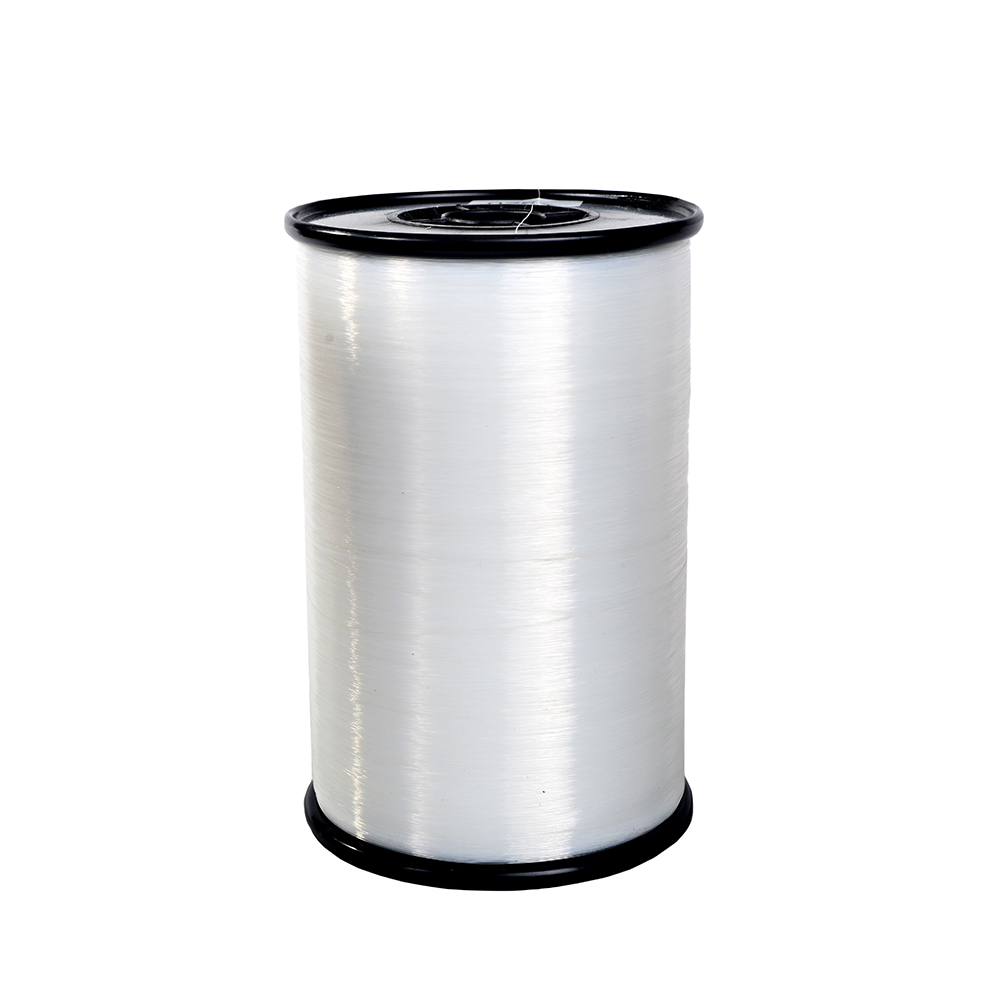
Ref SF-6137
320 Monofilament Natural
£30.46
No VAT added. UK delivery £15.54, free on orders of £180 or more. Delivery and returns
Choose quantity
Listed as in stock on 13 November 2026. Availability confirmed before payment.
Product details
320 Natural Monofilament is a single-filament nylon sewing thread for suitable upholstery, soft furnishings and other machine-sewing applications where a relatively unobtrusive thread is required. Unlike conventional spun or bonded sewing thread, monofilament is formed from one continuous nylon filament. Its natural appearance can be particularly useful on patterned or multi-coloured materials where frequent changes between coloured threads may be undesirable. Suitable for professional upholstery and sewing workrooms. Always test the thread with the intended fabric, needle and machine settings before production sewing. For an alternative monofilament specification, see 500 Monofilament Natural. For conventional coloured upholstery thread, compare Somabond 40's Bonded Nylon and M36 PolyCotton Corespun Sewing Thread.
Full description and care
320 Natural Nylon Monofilament Sewing Thread
320 Natural Monofilament is a nylon machine-sewing thread for suitable upholstery, soft furnishings and related sewing applications.
Monofilament differs from conventional spun or twisted sewing threads because it is formed from a single continuous nylon filament rather than multiple fibres or plies.
Its natural appearance can make the stitching relatively unobtrusive across a variety of materials, particularly where using a different coloured thread for every fabric would be impractical.
Suitable Upholstery & Sewing Applications
320 monofilament can be considered for suitable:
- Furniture upholstery
- Soft furnishings
- Cushion manufacture
- Concealed or less prominent stitching
- Patterned upholstery fabrics
- Multi-coloured materials
- Decorative attachment work
- General professional sewing applications
The correct application will depend on the sewing machine, needle, material and seam construction.
Always make a test seam using the actual materials before beginning finished production work.
For upholstery coverings, browse Status Fabrics' Vinyl & Fabric ranges.
How Monofilament Differs from Conventional Sewing Thread
Because monofilament consists of one continuous nylon filament, it can behave differently from bonded nylon, corespun or spun-polyester sewing thread.
Depending on the material and machine setup, differences may be noticeable in:
- Thread stiffness
- Tension requirements
- Stitch appearance
- Feeding through thread guides
- Needle selection
- How the thread sits within the finished seam
Do not assume that machine settings used successfully with another thread will automatically be correct for monofilament.
Start with the sewing-machine and needle manufacturer's guidance, then test and adjust using waste material before sewing the finished upholstery.
Choosing Between 320 and 500 Monofilament
also supplies 500 Monofilament Natural.
The numbers 320 and 500 should not be treated as though they form a universal sewing-thread thickness scale that can be directly compared with thread references such as 40's, 120's or M36.
Thread numbering systems vary according to construction and manufacturer.
When selecting between monofilament products, consider:
- Existing thread specification
- Intended sewing application
- Thread diameter
- Machine suitability
- Needle size
- Material thickness
- Number of layers
- Required finished stitch
Where replacing an existing thread that has performed successfully, retain the original cone information or product reference wherever possible.
Monofilament or Bonded Nylon?
For many furniture-construction seams, a conventional coloured upholstery thread may be preferred.
Somabond 40's Bonded Nylon Sewing Thread is Status Fabrics' popular bonded nylon option and is available in a large range of colours for furniture upholstery, bedding and mattress manufacture.
Bonded nylon and monofilament have different constructions and sewing characteristics.
Choose according to the required seam, material appearance and machine setup rather than treating one as a direct substitute for the other.
Where the finished stitching is intentionally visible, a properly matched coloured thread may provide a more conventional appearance.
PolyCotton Corespun Alternative
For another machine-sewing option, M36 PolyCotton Corespun Sewing Thread combines a continuous polyester core with a cotton outer covering.
This gives it different handling and sewing characteristics from both nylon monofilament and bonded nylon.
Having several thread constructions available allows professional workrooms to select the thread that best suits the covering material, seam and required finish.
Sewing Cushions, Piping and Upholstery Covers
Machine sewing in upholstery frequently involves more than joining two flat pieces of fabric.
A finished cushion or furniture cover may include:
- Multiple fabric layers
- Borders
- Zip panels
- Piped seams
- Reinforced corners
- Shaped upholstery panels
For piped cushion and furniture edges, browse Piping Cords.
For removable cushion covers and access panels, explore the Zipping range.
The additional material thickness created by piping or zip construction can affect needle choice, thread tension and machine setup, so test the complete seam construction rather than a single layer of fabric.
Needle & Machine Setup
The sewing-machine needle must be suitable for both the thread and material being sewn.
A needle that is too small can create excessive friction and thread problems, while an unnecessarily large needle may leave prominent holes or damage some upholstery materials.
Consider:
- Sewing-machine needle system
- Needle size
- Needle point
- Thread diameter
- Fabric or vinyl construction
- Number of layers
- Piping thickness
- Sewing speed
For specialist hand-upholstery needles and related equipment, browse Needles, Pins & Skewers.
For wider workshop equipment, visit Professional Upholstery Tools.
Keep the Sewing Machine Clean & Maintained
Lint and loose fibres can accumulate around sewing-machine mechanisms during upholstery work.
Routine cleaning and correct lubrication help keep suitable machines operating smoothly.
Use 125ml Sewing Machine Oil sparingly at lubrication points specified by the machine manufacturer.
After oiling, always sew onto waste material first to confirm that no excess lubricant can transfer onto the finished upholstery fabric.
Machine Sewing Thread or Upholstery Twine?
320 Monofilament is a machine-sewing product and should not be confused with the heavier twines used for traditional hand upholstery.
For spring work, edge stitching, buttoning, blind stitching and hand-closing seams, browse Upholstery Twines.
For monofilament, bonded nylon, corespun thread, overlocking thread and pre-wound bobbins, browse Sewing Threads & Barbobs.
Additional product information
320 Natural Monofilament is a single-filament nylon sewing thread for suitable upholstery, soft furnishings and other machine-sewing applications where a relatively unobtrusive thread is required.
Unlike conventional spun or bonded sewing thread, monofilament is formed from one continuous nylon filament. Its natural appearance can be particularly useful on patterned or multi-coloured materials where frequent changes between coloured threads may be undesirable.
Suitable for professional upholstery and sewing workrooms. Always test the thread with the intended fabric, needle and machine settings before production sewing.
For an alternative monofilament specification, see 500 Monofilament Natural. For conventional coloured upholstery thread, compare Somabond 40's Bonded Nylon and M36 PolyCotton Corespun Sewing Thread.
see the Sewing Threads & Barbobs or wider Sewing Threads & Twines range.
Specifications are reproduced from supplied product data and have not been checked against a physical sample. Colours vary between screens and devices, so on-screen images may not exactly match the physical material.